
International Conference on Evolutionary Genetics and Population Structure
ICEGPS
Official Invitation Letter Available
An official invitation letter will be provided upon successful registration for your participation in the conference.
Benefits of Registering as Listener
Access to All Conference Sessions
Plenary, keynote and parallel sessions
Networking Opportunities
Connect with global educators & researchers
Certificate of Participation
Digital certificate of participation
Invitation Letter Support
Official invitation letter after successful registration
Conference Kit / Digital Materials
E-proceedings & resource materials
Access to Keynote Sessions
Learn from leading experts & scholars
Conference Session Tracks
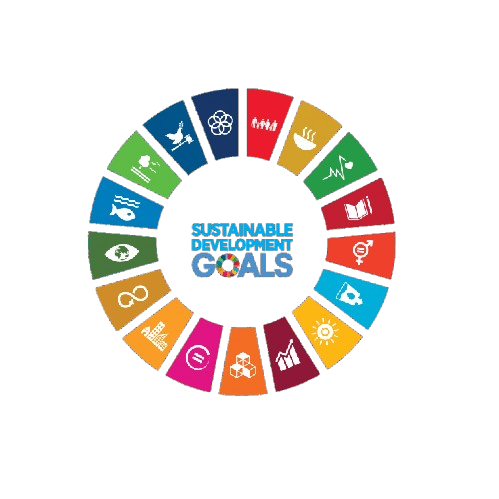
Aligned with UN Sustainable Development Goals
The conference's session tracks effectively support the following SDGs.



This track focuses on the fundamental mechanisms driving evolutionary change, including natural selection, genetic drift, and mutation rates. Discussions will explore how these processes shape genetic variation within and between populations.
SDG 3
SDG 4
This session will delve into the methodologies and applications of population genomics to understand the genetic structure of populations. Participants will present findings on allele frequency dynamics and their implications for evolutionary theory.
SDG 7
This track aims to explore the tools and techniques used in phylogenetic analysis to infer evolutionary relationships among species. Contributions will highlight advancements in molecular evolution and their impact on our understanding of biodiversity.
SDG 9
This session will investigate the genetic basis of adaptation and the processes leading to speciation. Researchers will present case studies that illustrate how environmental pressures drive evolutionary change.
SDG 13
This track will focus on the comparative genomics approach to understanding evolutionary relationships and functional adaptations across species. Presentations will cover the use of genomic data to elucidate evolutionary patterns and processes.
SDG 15
This session will examine the roles of gene flow and recombination in shaping genetic diversity and population structure. Discussions will highlight how these processes influence evolutionary trajectories in various taxa.
SDG 15
This track will explore the molecular mechanisms underlying genetic variation and their evolutionary implications. Participants will discuss the interplay between molecular evolution and population genetics.
SDG 3
SDG 9
This session will focus on the integration of phylogenetic and geographic data to understand the historical distribution of species. Presentations will highlight case studies that illustrate the impact of historical events on current population structures.
SDG 15
This track will address the genetic considerations essential for biodiversity conservation and management. Researchers will present strategies that leverage genetic data to inform conservation efforts and policy.
SDG 15
This session will explore the use of computational models to simulate evolutionary processes and predict genetic outcomes. Contributions will focus on the development and application of models in evolutionary genetics.
SDG 9
This track will investigate the factors influencing mutation rates and their consequences for evolutionary dynamics. Presentations will cover empirical studies and theoretical frameworks that elucidate the role of mutations in shaping genetic diversity.
SDG 3
SDG 4