
International Conference on Muscle Function and Joint Mechanics in Sports
ICMFJMS
Official Invitation Letter Available
An official invitation letter will be provided upon successful registration for your participation in the conference.
Benefits of Registering as Listener
Access to All Conference Sessions
Plenary, keynote and parallel sessions
Networking Opportunities
Connect with global educators & researchers
Certificate of Participation
Digital certificate of participation
Invitation Letter Support
Official invitation letter after successful registration
Conference Kit / Digital Materials
E-proceedings & resource materials
Access to Keynote Sessions
Learn from leading experts & scholars
Conference Session Tracks
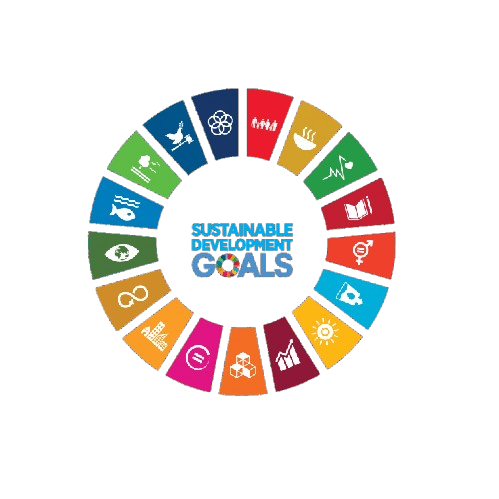
Aligned with UN Sustainable Development Goals
The conference's session tracks effectively support the following SDGs.



This track focuses on the latest findings in muscle physiology and its implications for athletic performance. Researchers are encouraged to present studies that explore the mechanisms of muscle contraction and adaptation in various sports.
SDG 3
SDG 4
This session aims to investigate the role of joint mechanics in optimizing athletic performance and preventing injuries. Contributions should highlight biomechanical analyses that elucidate the relationship between joint function and sports outcomes.
SDG 3
SDG 4
This track invites submissions that utilize advanced biomechanical techniques to analyze specific athletic movements. Studies should provide insights into movement efficiency, technique optimization, and performance enhancement.
SDG 3
SDG 9
This session will explore the intricacies of neuromuscular control and its impact on athletic performance. Research that examines the neural mechanisms underlying motor control and coordination in sports is particularly welcome.
SDG 3
SDG 4
This track focuses on the role of strength training in enhancing sports performance and injury prevention. Submissions should present evidence-based approaches to strength training methodologies tailored for athletes.
SDG 3
SDG 4
This session will delve into the biomechanical aspects of endurance training and its effects on athletic performance. Researchers are invited to share findings on how endurance training influences movement patterns and energy expenditure.
SDG 3
SDG 4
This track emphasizes the importance of biomechanical research in developing effective injury prevention strategies. Contributions should focus on identifying risk factors and implementing interventions to reduce injury rates among athletes.
SDG 3
SDG 4
This session will explore the principles and applications of functional training in enhancing athletic performance. Studies that demonstrate the effectiveness of functional training modalities in various sports contexts are encouraged.
SDG 3
SDG 4
This track invites research on innovative methods for monitoring athlete performance and assessing biomechanical parameters. Contributions should highlight the use of technology and data analytics in athlete monitoring.
SDG 3
SDG 4
This session will focus on the processes of motor learning and skill acquisition as they relate to sports performance. Researchers are encouraged to present studies that investigate the factors influencing skill development in athletes.
SDG 3
SDG 4
This track examines the intersection of biomechanics and rehabilitation in sports medicine. Submissions should explore biomechanical approaches to rehabilitation and their effectiveness in facilitating recovery and performance restoration.
SDG 3
SDG 4