International Conference on Flood Risk Mapping and Hydroclimatic Modelling
ICFRMHCM
Official Invitation Letter Available
An official invitation letter will be provided upon successful registration for your participation in the conference.
Benefits of Registering as Listener
Access to All Conference Sessions
Plenary, keynote and parallel sessions
Networking Opportunities
Connect with global educators & researchers
Certificate of Participation
Digital certificate of participation
Invitation Letter Support
Official invitation letter after successful registration
Conference Kit / Digital Materials
E-proceedings & resource materials
Access to Keynote Sessions
Learn from leading experts & scholars
Conference Session Tracks
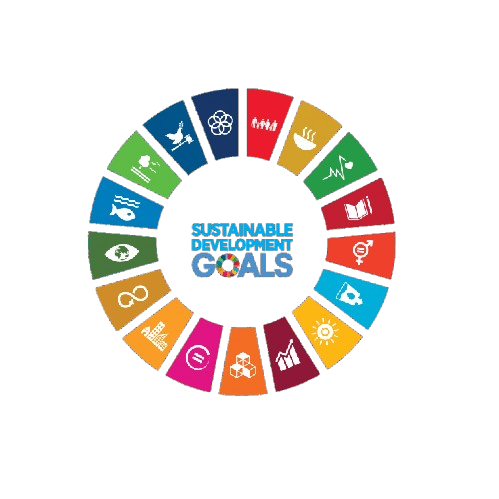
Aligned with UN Sustainable Development Goals
The conference's session tracks effectively support the following SDGs.
This track focuses on the latest advancements in flood risk mapping techniques, emphasizing the integration of remote sensing and GIS technologies. Participants will explore case studies that demonstrate effective mapping strategies in various hydroclimatic contexts.
SDG 9
SDG 11
This session will delve into cutting-edge hydroclimatic modeling methodologies that enhance our understanding of flood dynamics. Researchers are invited to present their findings on model development, calibration, and validation in relation to flood events.
SDG 13
This track will examine state-of-the-art flood forecasting techniques, including real-time data assimilation and predictive modeling. The focus will be on improving accuracy and timeliness in flood prediction to mitigate risks.
SDG 11
Participants in this session will discuss the assessment of hydrological hazards, including methodologies for quantifying risk and vulnerability. Emphasis will be placed on interdisciplinary approaches that incorporate social and environmental factors.
SDG 1
SDG 11
This track will investigate the influence of climate change on flood frequency and intensity, highlighting empirical research and modeling studies. Discussions will center on the implications for flood risk management and adaptation strategies.
SDG 13
This session will showcase recent advancements in hydrological modeling, including the use of machine learning and data-driven approaches. Participants will share insights on improving model performance and applicability in flood scenarios.
SDG 9
SDG 13
This track will focus on innovative inundation mapping techniques that enhance our understanding of flood extent and impact. Presentations will cover the use of hydraulic models and remote sensing data for accurate inundation assessments.
SDG 9
SDG 11
This session will explore strategies for building flood resilience in communities, including infrastructure improvements and policy interventions. Participants will discuss case studies that illustrate successful resilience-building initiatives.
SDG 11
SDG 13
This track will highlight the role of Geographic Information Systems (GIS) in flood modeling and risk assessment. Presenters will demonstrate how GIS tools can enhance data visualization and decision-making in flood management.
SDG 9
SDG 11
This session will address the relationship between extreme rainfall events and flood risks, focusing on statistical analyses and predictive modeling. Researchers will present findings that inform flood preparedness and response strategies.
SDG 11
SDG 13
This track will examine effective flood mitigation strategies, including land-use planning and ecosystem-based approaches. Participants will discuss the integration of scientific research into policy frameworks for sustainable flood management.
SDG 11
SDG 13